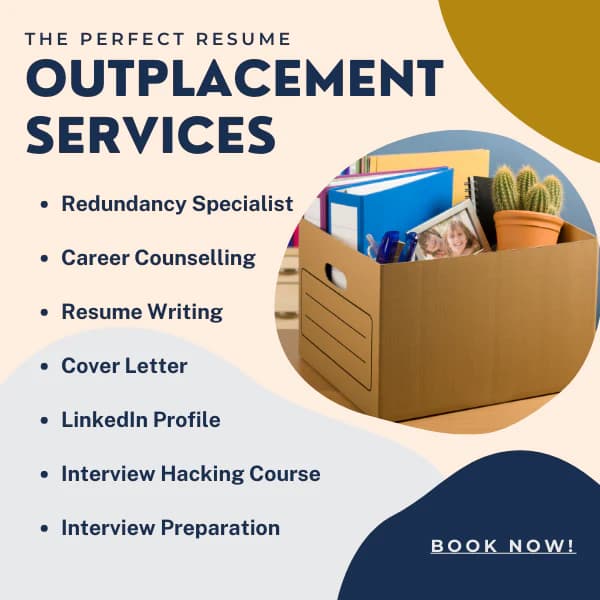
Outplacement services help people prepare for their next career step after leaving an organisation, often following redundancy or restructuring. An employer commonly funds the support, while an external provider works with the departing employee. Depending on the program, support may include career planning, resume and LinkedIn help, job-search guidance and interview preparation.
The name alone does not tell you what is included. A workshop, a document review and a program of individual coaching can all be described as outplacement. Check the scope, access period and delivery model before deciding whether a program meets your needs.
What can outplacement support include?
- Career direction: discussing strengths, preferences and possible next roles.
- Application documents: reviewing or writing a resume, cover letter or LinkedIn profile, depending on the agreement.
- Job-search planning: choosing target roles, organising applications and preparing for conversations with recruiters or professional contacts.
- Interview preparation: developing relevant examples and practising responses.
- Ongoing coaching: reviewing progress and adjusting the approach within the program's agreed limits.
Some providers offer group sessions, self-service resources or specialised executive support. Ask which services are included for each participant rather than assuming every option is available.
How does an outplacement program work?
- Confirm access: the employer and provider explain who is eligible, how to start and when access expires.
- Discuss goals: the participant and consultant review the person's background and priorities.
- Agree practical actions: these might include updating a resume, identifying suitable roles or preparing for an interview.
- Use the available support: the participant completes agreed preparation and attends sessions or reviews.
- Review progress: use the remaining time to address application feedback and next steps.
This is a typical outline, not a promise of a particular service. Some programs follow a fixed schedule; others allow participants to choose how to use their allocated support.
If your employer has offered outplacement
Ask for the program details and a contact person. Check the deadline for accepting or activating the service, whether you need to begin immediately and how sessions are arranged. Before the first meeting, gather your current resume, a brief career history and a few roles or questions you want to discuss.
You do not need to have a complete career plan before using the service. It can be useful to identify the most immediate need, such as explaining your experience, deciding between role types or preparing for an upcoming interview.
Ask what information the provider shares with the employer. Attendance or aggregate program reporting is different from the content of a private coaching conversation. Confirm the actual confidentiality arrangements rather than assuming a particular policy applies.
Questions employers should ask a provider
- What does each participant receive: sessions, document writing, reviews, resources or a combination?
- How long can they access support, and when does that period begin?
- Who delivers the support, and what experience do they have with the affected roles?
- How are remote access, scheduling and accessibility needs handled?
- What reporting is supplied, and how is participant confidentiality explained?
- What happens if a participant needs support beyond the agreed scope?
- Does the quote specify participant numbers, GST treatment, inclusions and any additional charges?
Compare quotes on the same basis. A lower price for a single workshop cannot be directly compared with individual coaching and document writing without considering the difference in support.
What outplacement does not guarantee
Career support does not guarantee a job offer or a fixed time to re-employment. Recruitment decisions remain with prospective employers. A provider may help with applications and preparation, but the participant still needs to engage with the process.
Do not assume an outplacement package includes legal advice, financial advice or therapeutic counselling. If you need one of those services, ask about the provider's scope and seek the appropriate specialist. Keep questions about the employment decision or individual entitlements separate from the career-support plan.
How to assess whether the support is useful
Agree practical milestones: a clear target role, a usable resume, a realistic search plan or stronger interview examples. Review whether the participant can access and use the service, not just whether resources were offered. Employment outcomes can take time and depend on factors beyond the program.
Examples of different delivery models can be seen in Hays' outplacement overview and Outplacement Australia's explanation. Their inclusions are specific to their own services.
Explore support from The Perfect Resume
Employers can explore our outplacement services, read the Employee-First Approach brochure or review the outplacement package. Confirm the scope for your people before ordering. To discuss requirements, call 1300 217 374 or email info@theperfectresume.com.au.
If you are preparing an individual job application and already have a draft, you can request a free resume review.
Take the Next Step Today
Fast turnaround, proven results, and complete job search support beyond resumes.