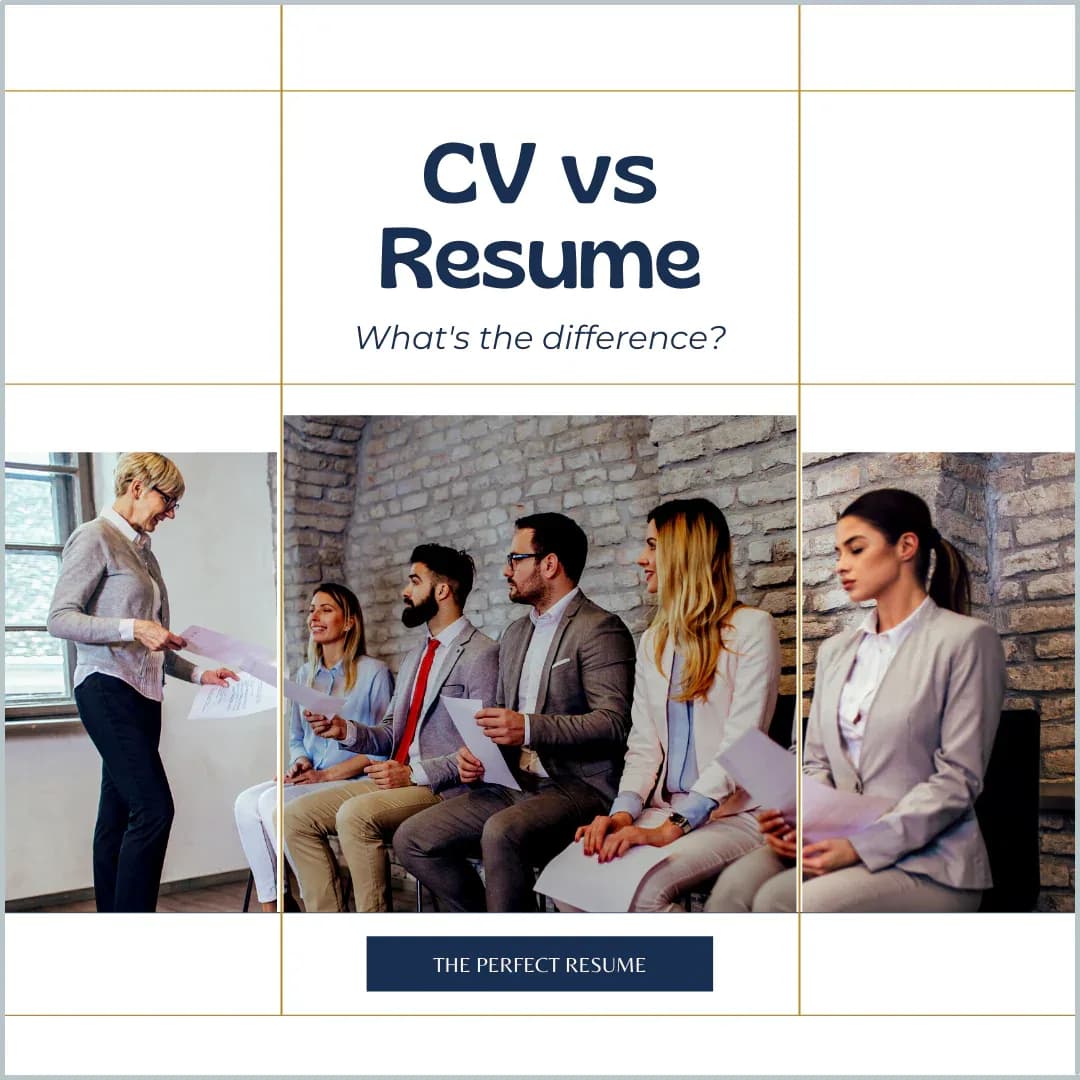
A CV, short for curriculum vitae, is a document that presents your experience, qualifications and skills to an employer. In Australian job advertisements, CV and resume are commonly used interchangeably. If an employer asks for your CV, they usually want a clear account of why your background suits the role.
The exception matters: an academic or research CV can be a more detailed record of publications, teaching, grants and other scholarly work. Read the application instructions before choosing what to send.
CV versus resume: which document do you need?
- An Australian job advertisement asks for a CV or resume: send a relevant employment document using the employer's terminology and instructions.
- A university or research role asks for an academic CV: check the required sections and provide relevant scholarly evidence.
- An overseas employer asks for a CV: check local expectations and the application pack; the distinction can differ by country and role.
- The employer asks for a cover letter or selection criteria as well: provide those separately when requested. Your CV does not replace them.
There is no universal page limit that overrides the employer's instructions. Give recent, relevant experience enough space and reduce detail that does not help assess your application.
What should a CV contain for a job?
- Contact details: your name, a reliable phone number and email, and relevant location information.
- A short profile: your relevant background and the capabilities you offer.
- Employment or relevant experience: actual titles, organisations, dates and examples of your contribution.
- Education and training: qualification, provider and completion date; label study in progress accurately.
- Relevant skills: tools and capabilities supported by your experience.
Add other sections when they help the application: projects, volunteering, publications or professional registrations, for example. Avoid filling space with unrelated personal information.
A simple CV entry example
Illustrative example: this is a fictional sample, not a client resume. Replace brackets with your own details and use only statements you can support.
Administration Assistant — [Organisation], [month/year–month/year]
- Maintained the shared appointment calendar and confirmed changes with staff before updating customer bookings.
- Checked incoming forms for missing information and followed up before forwarding complete records to the processing team.
This tells the reader what the person did and how they worked. A stronger version can include a verified result or scale, but useful evidence does not always need a percentage.
What if you have no paid work experience?
Use relevant study, placements, volunteering or personal projects, with each setting clearly labelled. Explain your own actions rather than claiming the group's whole result. A course project can show research or organisation; it should not be presented as paid employment.
Check what the employer will receive
Open the exported file and check that the text is readable, dates are consistent and contact details work. Follow the requested file type. If an application portal fills fields from your CV, review those fields before submitting.
For a layout to work from, see our CV templates and guidance. For the technology behind automatic form filling, read how resume parsing works.
Australian terminology and application expectations are also explained in Indeed's CV guide and the Department of Climate Change, Energy, the Environment and Water's CV guidance. Always follow the instructions for your own vacancy.
Get help with your CV
Have a draft ready? Request a free resume review and include a target job advertisement. If you want help writing your application, compare our resume writing packages and check the documents and support included in your selected option.
Take the Next Step Today
Fast turnaround, proven results, and complete job search support beyond resumes.